
How to Choose the Right Pressure Relief Mattress for Your Care Home
Pressure ulcers remain one of the most significant risks for residents with reduced mobility. Choosing the right pressure relief mattress is therefore one of the most important decisions a nursing home can make, helping to protect skin integrity, improve comfort and support high-quality, person-centred care.
However, with a wide range of static foam, hybrid and alternating air mattresses available, knowing which option is most appropriate can be challenging.
The best pressure relief mattress is not necessarily the most expensive or the most advanced. It is the mattress that matches the resident's individual clinical needs following a thorough pressure ulcer risk assessment.
What is a pressure relief mattress?
A pressure relief mattress is designed to redistribute pressure away from vulnerable parts of the body, helping to reduce the risk of pressure ulcer development in people who spend prolonged periods in bed.
Unlike a standard domestic mattress, pressure care mattresses are engineered to spread body weight more evenly, reducing sustained pressure on areas such as the heels, sacrum, hips and shoulders.
Pressure care mattresses are one element of an effective pressure ulcer prevention strategy and should always be used alongside regular repositioning, skin assessment, nutrition and hydration, and person-centred care planning.
Who may need a pressure relief mattress?
Not every resident requires the same level of pressure care.
Residents may be at greater risk if they:
· Have limited mobility.
· Spend long periods in bed.
· Already have pressure damage.
· Have poor circulation.
· Have experienced significant weight loss.
· Have fragile or ageing skin.
· Have complex medical conditions affecting skin integrity.
Every resident should receive an individual assessment, with the mattress selected according to their level of risk and changing clinical needs.
The different types of pressure relief mattress
Understanding the different mattress categories can help care providers make informed decisions.
Static foam mattresses
High-specification foam mattresses are often suitable for residents at low to high risk of pressure damage, depending on the product selected and the resident's assessment.
Modern foam mattresses use specially designed, high-density foams that conform to the body's shape and distribute pressure evenly.
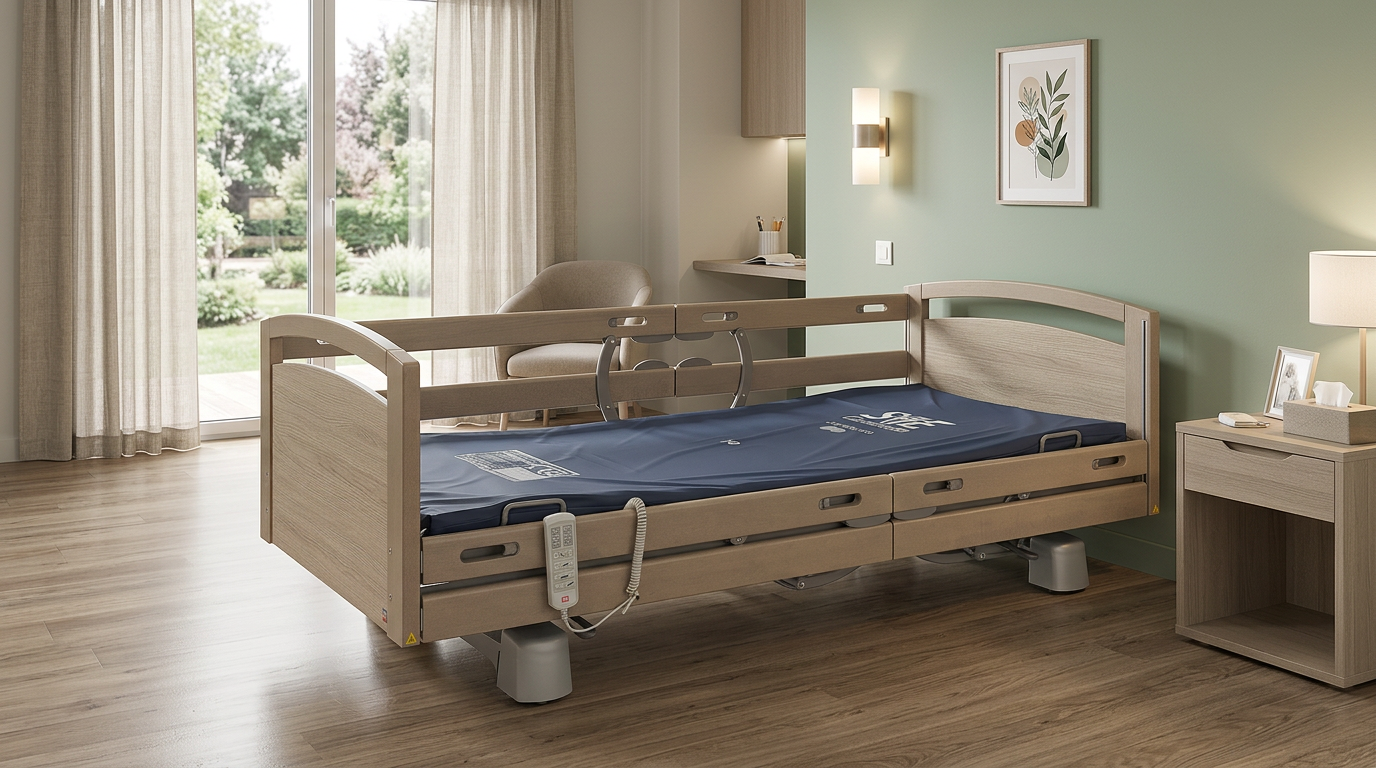
Many also include castellated foam sections, which improve pressure redistribution while encouraging airflow around the resident to help maintain comfort. Several mattresses in the S&E CareTrade range also feature vapour-permeable covers that support infection prevention and ease of cleaning.
Static mattresses have no moving parts, making them quiet, simple to use and well suited to many care home environments.
Alternating air mattresses
Residents with a very high risk of pressure ulcer development, or those with existing pressure damage, may benefit from an alternating air mattress following clinical assessment.
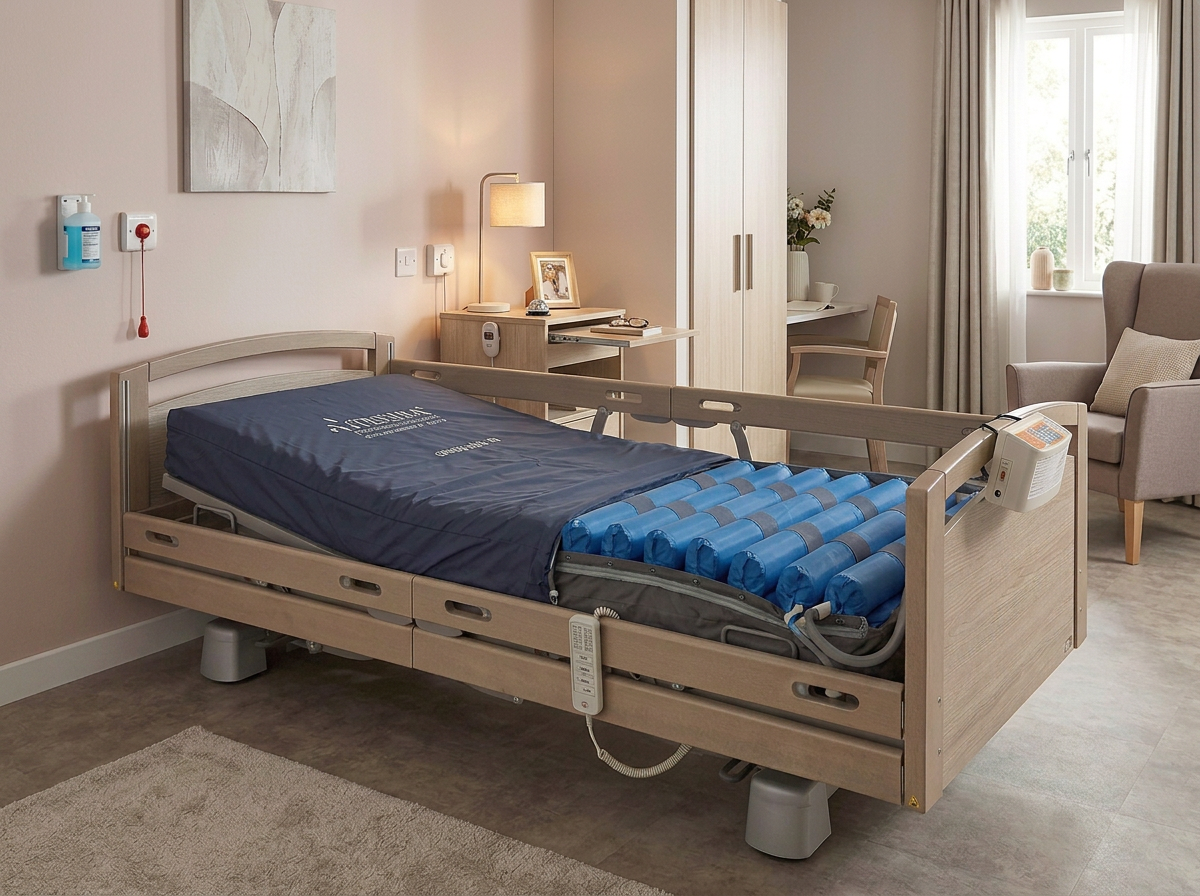
These systems use air-filled cells that inflate and deflate in alternating cycles. This continually changes the areas under pressure, reducing prolonged loading on vulnerable tissues.
Modern systems include features such as adjustable pressure settings, quiet pumps and safety functions designed to maintain therapy even during temporary power interruptions.
Hybrid mattresses
Hybrid mattresses combine pressure-redistributing foam with air technology, offering flexibility for residents whose clinical needs may change over time.
They can provide an excellent solution where both comfort and enhanced pressure management are priorities.
Why the highest specification isn't always the right choice
One of the most common misconceptions is that every resident should be placed on the highest level of pressure care.
In reality, over-specifying equipment may not always provide the best outcome.
Residents should receive equipment that matches their assessed needs, mobility, comfort and care plan.
Using an unnecessarily complex mattress may:
· Reduce independence for residents who can still reposition themselves.
· Increase maintenance requirements.
· Add unnecessary cost.
· Introduce equipment features that are not clinically required.
The goal is always to provide the most appropriate support, rather than simply the most advanced product.
Questions to ask before choosing a mattress
Before purchasing a pressure relief mattress, consider the following:
1. What is the resident's level of pressure ulcer risk?
Pressure ulcer risk assessment should always guide mattress selection.
2. Is the resident able to reposition independently?
Residents who can move independently may have different requirements from those who are fully dependent on carers.
3. Does the mattress need to work with a profiling bed?
Most care home mattresses are designed to flex safely with profiling beds while maintaining pressure redistribution.
4. What is the resident's weight?
Every mattress has a safe working load. Selecting the correct specification is essential to ensure the mattress performs as intended.
5. Is infection prevention a priority?
Mattress covers should be durable, waterproof, vapour permeable and easy to clean, helping to support infection prevention procedures throughout the home.
6. Will the resident's needs change?
For long-term care settings, it is worth considering equipment that can adapt as residents' clinical needs evolve.
Pressure care is about more than the mattress
Even the best pressure relief mattress cannot prevent pressure ulcers on its own.
Effective prevention also relies on:
· Regular skin inspections.
· Repositioning where appropriate.
· Good hydration and nutrition.
· Continence management.
· Individual care planning.
· Staff education.
· Ongoing clinical review.
Pressure care works best when every element of the resident's care plan works together.
Choosing the right equipment for your nursing home
Every nursing home supports residents with different needs. Some homes may require a broad range of pressure care solutions, while others may benefit from a smaller selection matched to their resident profile.
S&E CareTrade supplies a comprehensive range of pressure care products, including static foam mattresses, hybrid systems and alternating air mattresses, alongside profiling beds and pressure-relieving cushions. Working closely with care providers across Northern Ireland and the Republic of Ireland, we help nursing homes select equipment that supports both resident wellbeing and day-to-day clinical practice.
Our experienced team can advise on product selection for new nursing homes, refurbishment projects and ongoing replacement programmes, ensuring every resident has access to equipment that is appropriate for their assessed needs.
Pressure Relief Mattress Checklist
When reviewing your pressure care provision, ask yourself:
· Has every resident received a current pressure ulcer risk assessment?
· Does each mattress match the resident's assessed level of need?
· Are mattress covers clean, intact and free from damage?
· Are mattresses compatible with the bed frame?
· Are staff familiar with the correct use of each mattress system?
· Is pressure care equipment reviewed as residents' needs change?
· Is there a planned replacement programme for ageing mattresses?
Choosing the right pressure relief mattress is about much more than buying equipment. It is about creating an environment where residents are protected, comfortable and supported by care that is tailored to their individual needs.
By combining appropriate equipment with good clinical practice, nursing homes can significantly reduce the risk of pressure damage while improving both resident outcomes and quality of care.