
Everyday skincare in nursing homes: a practical guide for care teams
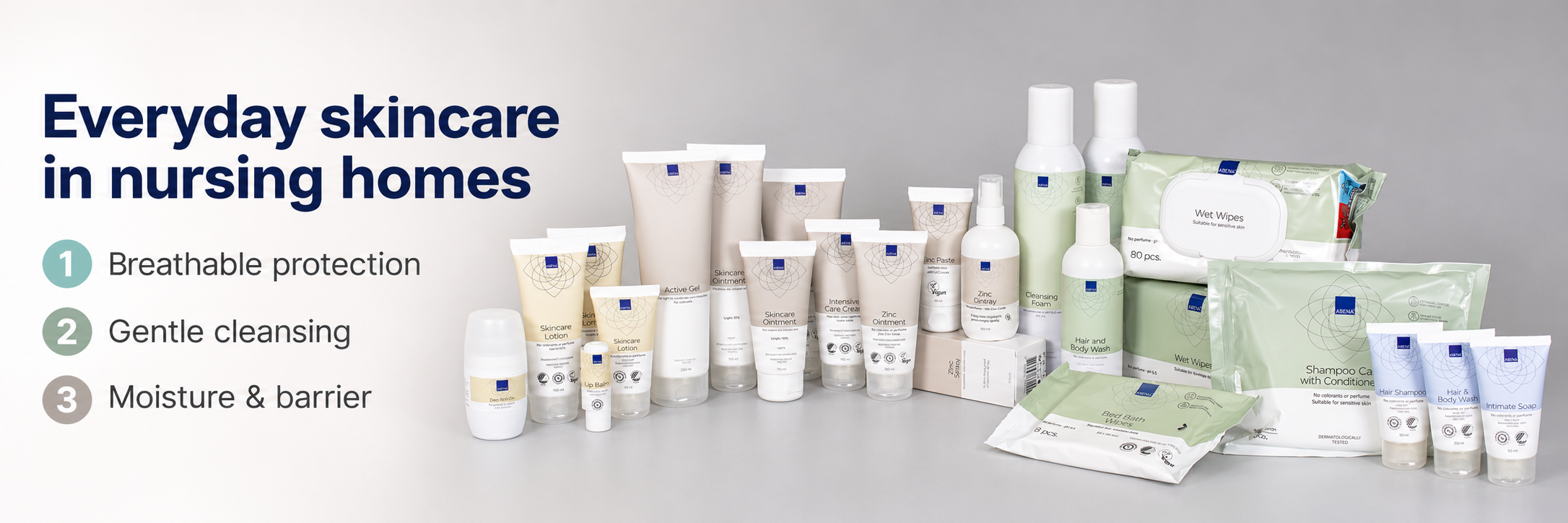
Skincare in nursing homes: a practical guide to everyday care
A resident mentions that their legs itch at night. Another says their heel feels sore as a care worker helps them put on their socks. Everyday conversations like these can be the first sign that someone's skin needs attention.
Washing, dressing and continence care all give nursing home staff an opportunity to notice changes. They also give residents a chance to say what feels comfortable, which products they prefer and how much help they would like.
Make washing personal
Start with a simple question: "How would you like to wash today?" A resident who usually enjoys a shower may prefer a wash at the basin if they're tired. Someone who needs help washing their back may still want to wash their face and intimate areas themselves.
Before you begin, gather the resident's own toiletries, clean towels and clothes. Check that the room and water feel comfortable, close the door or curtains and uncover only the area being washed. Place the items the resident wants to use within easy reach and give them time.
Choose the cleanser that suits the person's skin and follow thier plan. Ordinary soap and shower gel can leave dry skin feeling tight or itchy. Where the care plan recommends a soap substitute, use it as directed and gently pat the skin dry. For someone who finds a full wash tiring, a rinse-free wash glove may be a comfortable option, such as those in the ABENA skincare range. Use a fresh glove or wipe as you move between body areas, leaving intimate care until last.
Keep each resident's toiletries seperate
When several residents use the same bathroom, it's easy to mix up two similar tubes of moisturiser. Clearly label each resident's personal toiletries and skincare products with their name. Store them seperately from other residents' belongings and use them only for that person.
After a wash or shower, return the products to the resident's own storage space. Leaving a cleanser or cream beside a shared basin makes it easy for someone else to pick it up. Keeping these items for individual use helps reduce the risk of cross-contamination and respects the resident's privacy and personal preferences.
Care for dry, itchy skin
Ask how the skin feels as well as looking at it. "My shins itch when I get into bed" tells the nurse more than a general note about dry skin. It also helps the team understand how the discomfort is affecting the resident.
If an emollient is part of the resident's care plan, just after washing is a good time to apply it. Pat the skin dry, then gently smooth the product over the agreed areas in the direction of hair growth. Ask whether it feels comfortable. If it repeatedly stings or the itching persists, let the nurse know so they can review the routine.
Emollient residue can build up on clothing, bedding and dressings, making these fabrics catch fire more easily. Make sure residents and those supporting them know to keep affected fabrics away from cigarettes and naked flames.
Protect skin during continence care
Repeated contact with urine or faeces can leave the skin sore and inflamed. This is called incontinence-associated dermatitis (IAD). A resident may first mention that it stings when they wash or that sitting down has become uncomfortable.
After an episode of incontinence, help the resident get clean and comfortable promptly. Use the gentle cleanser identified in their care plan and avoid rubbing or repeated wiping. If the nurse has recommended a barrier product to protect the skin from moisture, check where to apply it, how much to use and when to reapply. Instructions vary between products.
It's also worth paying attention to how the resident's continence pad fits. If it regularly rubs at the leg or the resident often has damp clothing, tell the nurse or continence lead. Those details can help them review the fit, absorbency and changing routine with the resident.
Know which skin changes to report
When helping someone dress or wash, pay particular attention to the heels, hips and base of the spine, especially if they spend long periods in bed or seated. Look for changes from the resident's usual skin tone. Redness can be harder to see on brown or black skin, so take reports of pain seriously and notice whether an area feels unusually warm, firm or tender.
Report new pain, persistent discolouration, blistering or broken skin promptly to the nurse responsible. Moisture damage and pressure damage can look similar and may occur together. A sore patch close to a continence pad still needs assessment for possible pressure damage.
Be specific when you record and hand over a concern. For example, "Mary said her left heel hurt when I put her sock on this morning. It felt warmer than her right heel, and I told the nurse." That gives the next colleague a clear picture of what changed and what action has already been taken.
Choosing skincare supplies for your nursing home
A good place to start is with the products staff and residents use each day. Can a colleague easily find the rinse-free cleanser for a bedside wash? Is it clear which cream is for dry skin and which is for moisture protection? Do the product names in each resident's care plan match the labels staff see on the shelf?
S&E CareTrade supports nursing homes across Northern Ireland and the Republic of Ireland with personal care supplies, continence products and product training. If you're reviewing the skincare products used in your home, our team can help you explore the options for your resident' daily routines.
Explore the S&E CareTrade continence care range